Safety in Care
Improving safety for young people in care
Responsibilites
Service Design
Organisation
Ministry for Children | Oranga Tamariki

Contents
Background
In July 2024, New Zealand's Royal Commission of Inquiry into Abuse in Care released its final report – Whanaketia: Through pain and trauma, from darkness to light. The 3,000-page report found that between 113,000 and 253,000 children, young people and adults had experienced abuse and neglect in state and faith-based care between 1950 and 1999.
Among its 138 recommendations were urgent calls to overhaul safeguarding practices in residential care – including how searches of young people in residences were conducted.
My role
I was brought in as the sole Service Designer to lead the discovery and design of new search safeguards – working within tight legislative constraints, a fast-moving delivery timeline, and deeply sensitive subject matter.
A note on confidentiality
Some artefacts from this project are not shown publicly out of respect for the sensitivity of the subject matter and the young people involved. The work shown here has been selected to represent the approach and outcomes without compromising privacy or confidentiality.
Discovery
Establishing project foundations
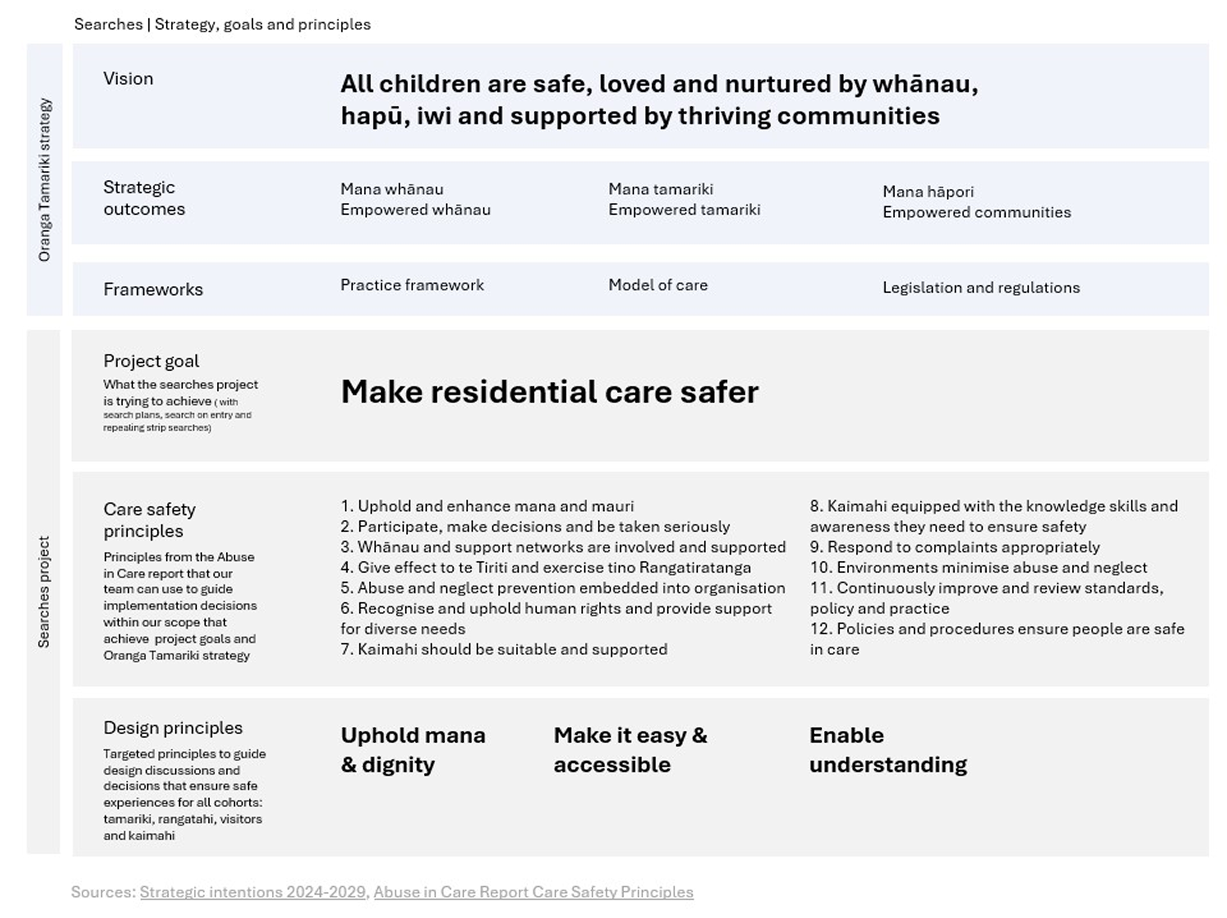
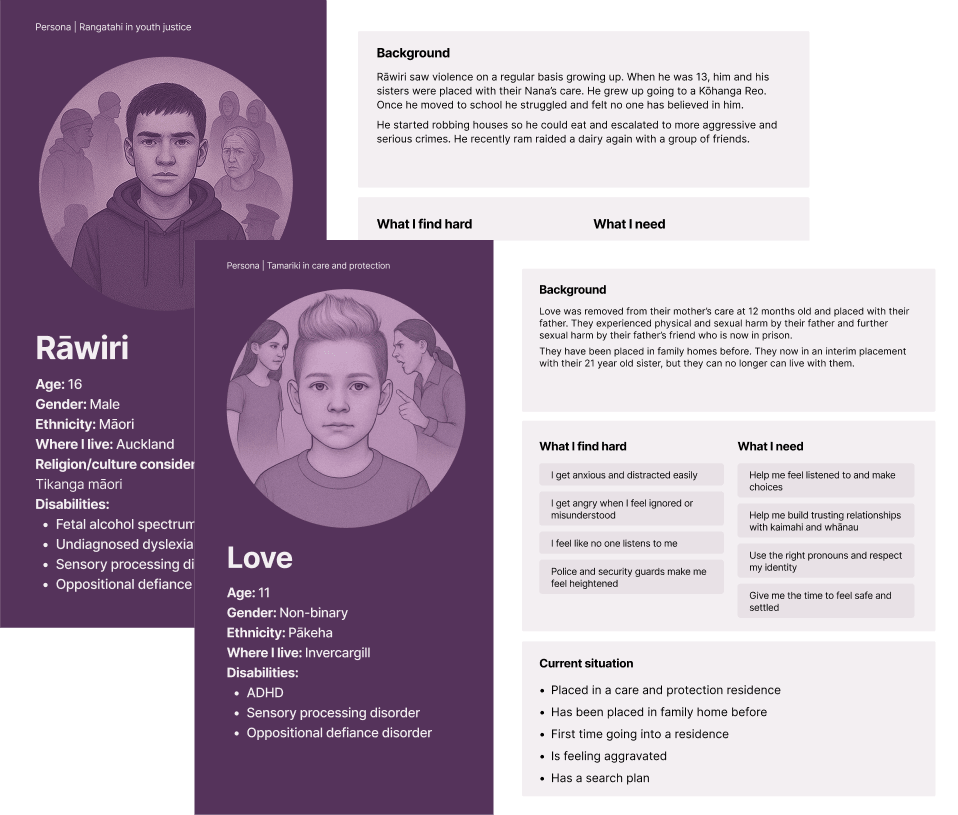
To keep complex user needs central in a fast-paced environment, I defined clear design principles, created personas for the young people and staff most affected, and mapped the current state to give the team a shared understanding of the problem before solutions were explored.
Supporting leaders to put people first
I translated complex research into clear, evidence-based artefacts that helped senior leaders make strategic decisions grounded in the needs of young people and staff – including evidence-based personas and service blueprints that communicated who we were designing for, what they need and actionable recommendations.

Design
Facilitating workshops with competing needs
Search practices sit at the intersection of safety, legislation, trauma, culture and human rights – meaning the people involved have directly competing needs. I facilitated targeted workshops with rangatahi, kaimahi (staff) and leadership separately, ensuring insights from each group genuinely informed the emerging design rather than being drowned out by organisational priorities or the loudest voice in the room.
Mapping the future state
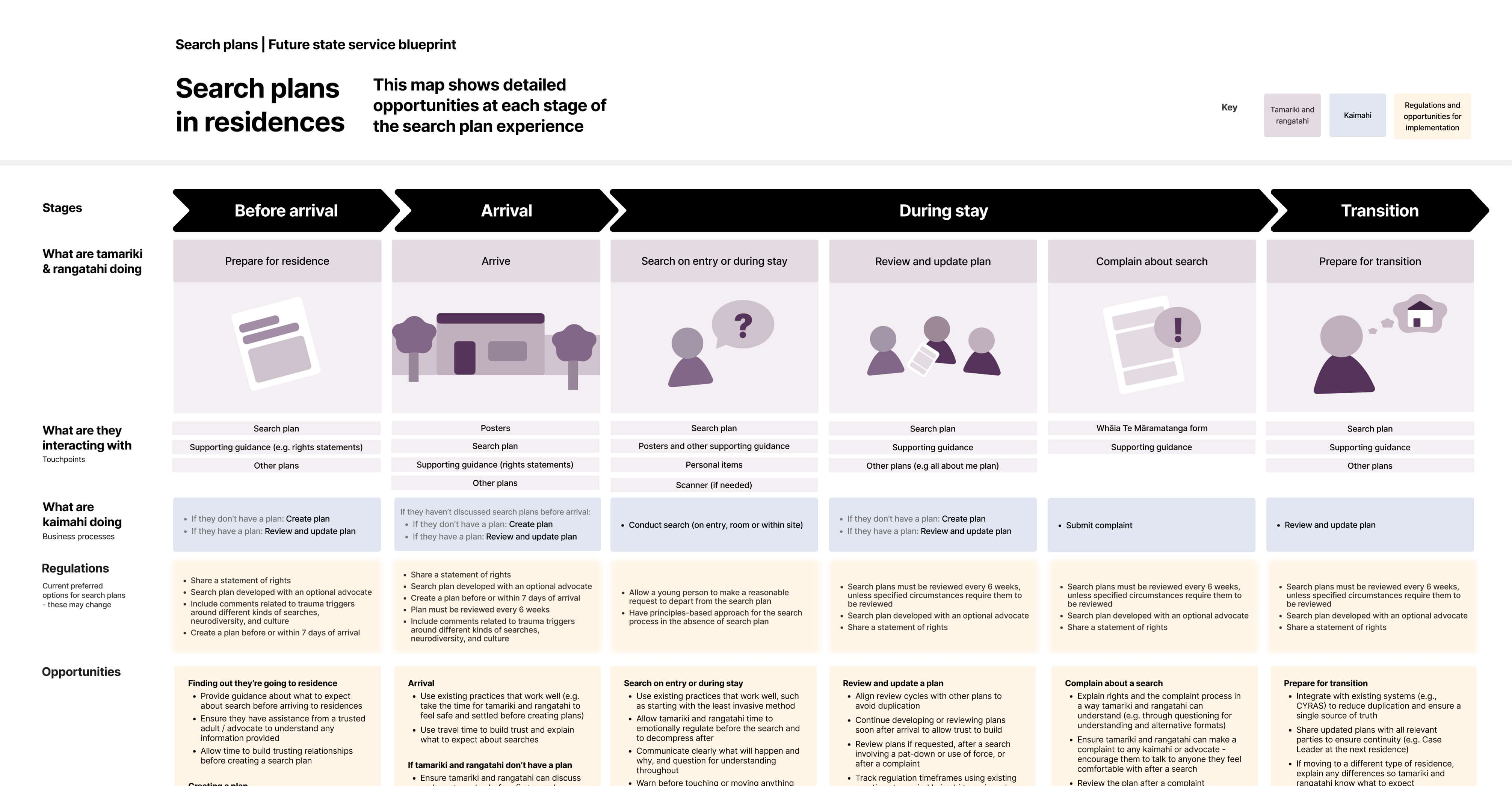
I developed a detailed future state service blueprint for search plans in residences – mapping what young people and staff were doing, what they were interacting with, and the opportunities at each stage of the experience.
Raising and mitigating safety risks
In every conversation with staff, there was a concern about a risk that about how the new legislation and changes could harm them. I facilitated a multi-disciplinary workshop to suggest recommendations and explore ways we can mitigate the risk through policy, how the plan and supporting guidance were designed, and through reporting and monitoring.
The end result is a service that meets the legislative intent, helps keep young people and staff safe.


Prototyping with in context
Through prototyping directly with staff and young people in youth residences, I developed insights and recommendations that helped simplify the service experience while still meeting complex legislative requirements.
Using service design, the new search plan prototype evolved from a compliance document into a tools for young people and staff to have a genuine, relational conversation. The plan itself was the documentation that helped staff uphold those needs.

Result
Illuminating the path forward for delivery
The discovery and design work established a clear foundation for legislative implementation – giving the programme the evidence, artefacts and direction needed to move into delivery with confidence.
Senior leadership supported to unblock critical delivery milestones through compelling, evidence-based artefacts
Design principles, personas and current state mapping adopted as the foundation for the programme – ensuring young people's needs remained central in a high-pressure environment
Future state service blueprint and tested prototypes used to inform legislative implementation decisions
Search plan prototype redesigned from a compliance document into a facilitation tool that supported kaimahi to have trauma-informed conversations with young people
Team capability built in field research, prototyping and testing through mentoring and hands-on upskilling